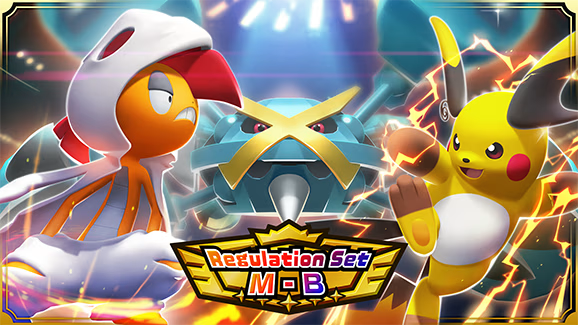
Regulation Set M-B
Pokemon Champions Regulation Set M-B Mega Analysis
Regulation Set M-B runs from June 17, 2026 through September 2, 2026, and it is the first rule window where the mobile launch, new Mega Stones, and the returning item pool all collide. This guide turns the source notes into an English long-form meta breakdown for players planning ranked teams.
Published
Life Orb raises Garchomp
Life Orb gives Garchomp cleaner damage thresholds and helps explain why it immediately pressures the top of the usage chart.
Rain gains a real Mega
Mega Swampert is the cleanest new rain payoff because it combines speed, bulk, Water damage, and Ground coverage.
Strong abilities are not enough
Mega Raichu and Mega Eelektross show that a powerful ability still needs the right typing, stats, and move pressure.
What Regulation Set M-B changes
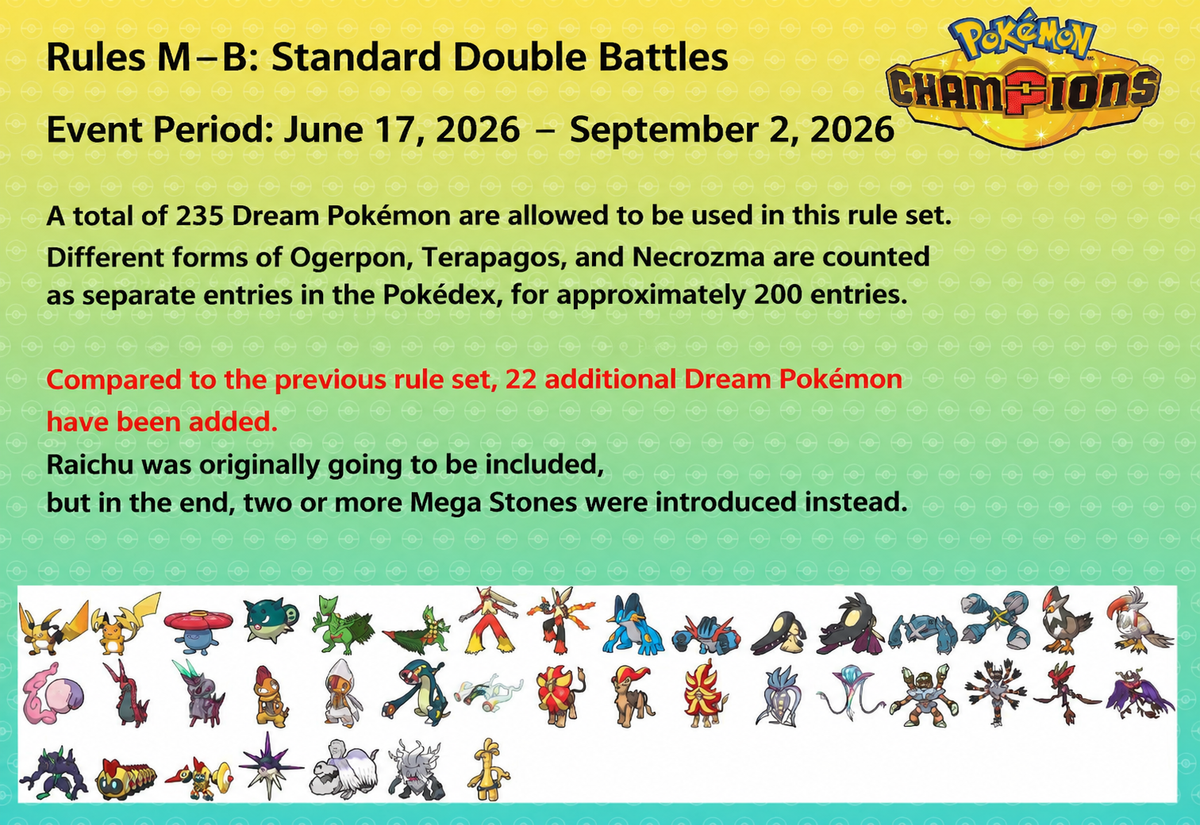
Regulation Set M-B is not a full reset of Pokemon Champions. The source material counts 235 in-game icons and roughly 200 final-form options after duplicates and alternate forms are removed. The new competitive question is narrower: which of the added Mega Pokemon and Mega Stones actually changes ranked play, and which ones only look exciting because their ability text is flashy?
The answer starts with availability. No legendary Pokemon are part of this wave, so the format is still shaped by strong regular Pokemon such as Garchomp, Basculegion, Sneasler, Archaludon, Pelipper, and the existing Mega attackers. That matters because many of the new Megas are not competing against restricted legends. They are competing against reliable, already-tested cores.
The item pool may be the biggest M-B shift
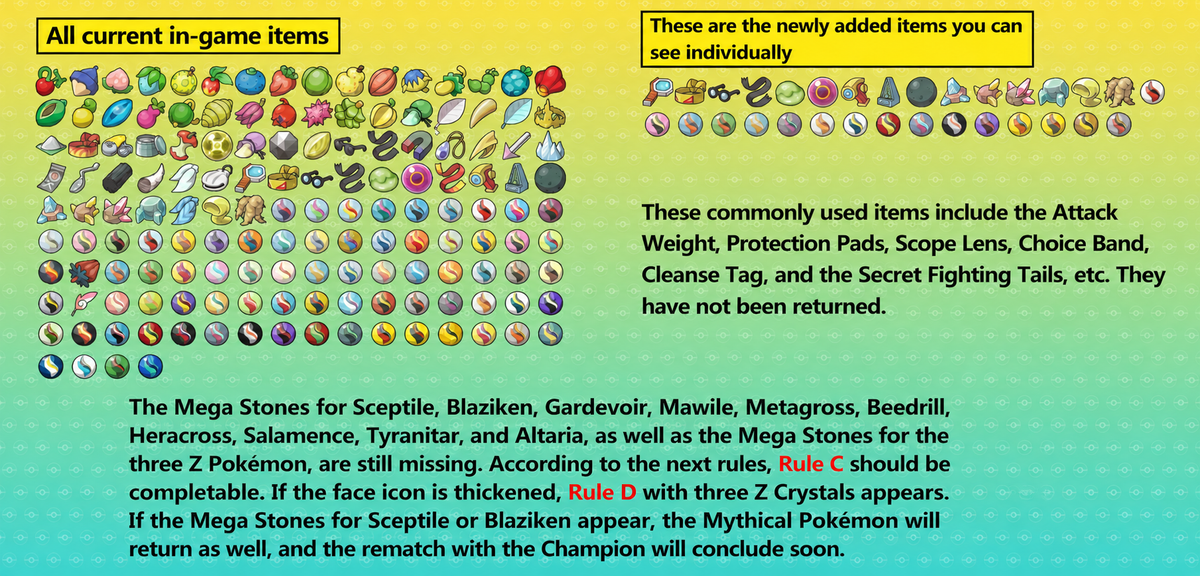
The most important early lesson from Set M-B is that items can move the metagame as much as new Pokemon. Life Orb is the headline. It turns many neutral hits into real damage checks, and Garchomp benefits immediately because it already had speed, typing, and spread pressure. A Life Orb Garchomp is easier to fit than a fragile new Mega that requires the only Mega slot on the team.
Light Clay also matters because screens buy turns for fragile sweepers such as Mega Raichu, Mega Blaziken, and Mega Sceptile. Wide Lens is smaller on paper but important in practice: Pokemon Champions has several powerful moves that become much more attractive when the miss chance is reduced. At the same time, several familiar competitive items are still absent or limited, so players cannot simply import standard cartridge habits into this format.
Mega Raichu X and Mega Raichu Y: high profile, real flaws
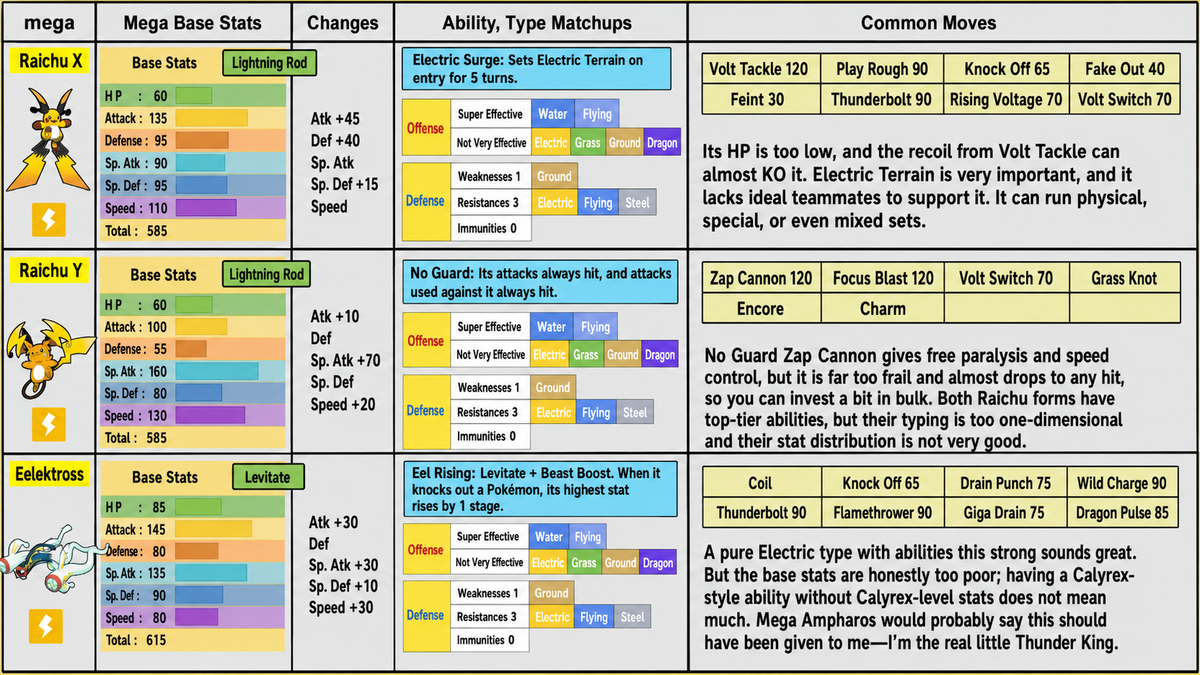
Mega Raichu is the face of the rule set, but it is not automatically the best Pokemon in Regulation Set M-B. Mega Raichu X is the physical direction. It gets meaningful offensive stats and, most importantly, an Electric Terrain role that can contest terrain and empower Electric pressure. The issue is that pure Electric offense is narrow. Ground types ignore Electric moves, Lightning Rod mirrors create awkward standoffs, and Raichu is still fragile.
Mega Raichu Y is more interesting as a disruption attacker. No Guard makes Zap Cannon a real control move instead of a gimmick: damage plus guaranteed paralysis can decide a turn even when the target survives. Steam Eruption and Grass Knot-style coverage give it ways to punish specific checks such as Swampert, but the same problem remains. Raichu wants Electric damage, protection, utility, and coverage, and four move slots disappear quickly.
The practical ranking is simple: both Mega Raichu forms are playable and searchable, but neither should be treated as plug-and-play. They need screens, redirection, speed control, or matchup-specific partners. Teams that only ask Mega Raichu to spam Electric attacks will lose to Ground types and Lightning Rod answers.
Mega Eelektross: the ability is better than the Pokemon
Mega Eelektross is the clearest example of a Set M-B trap. Its custom ability combines Ground immunity with a Beast Boost-style stat rise after a knockout, which sounds elite. The problem is the rest of the profile. Pure Electric typing has the same offensive blind spot as Raichu, the stat spread is not fast enough to snowball cleanly, and the move pool does not provide the kind of signature pressure that makes a booster terrifying.
If Mega Eelektross earns usage, it will be as a matchup pick that punishes weakened teams. It is not the new Calyrex-style sweeper. A snowball ability is strongest on a Pokemon that already moves first and claims KOs without help. Eelektross usually needs the help before the ability can matter.
Mega Sceptile, Mega Blaziken, and Mega Swampert
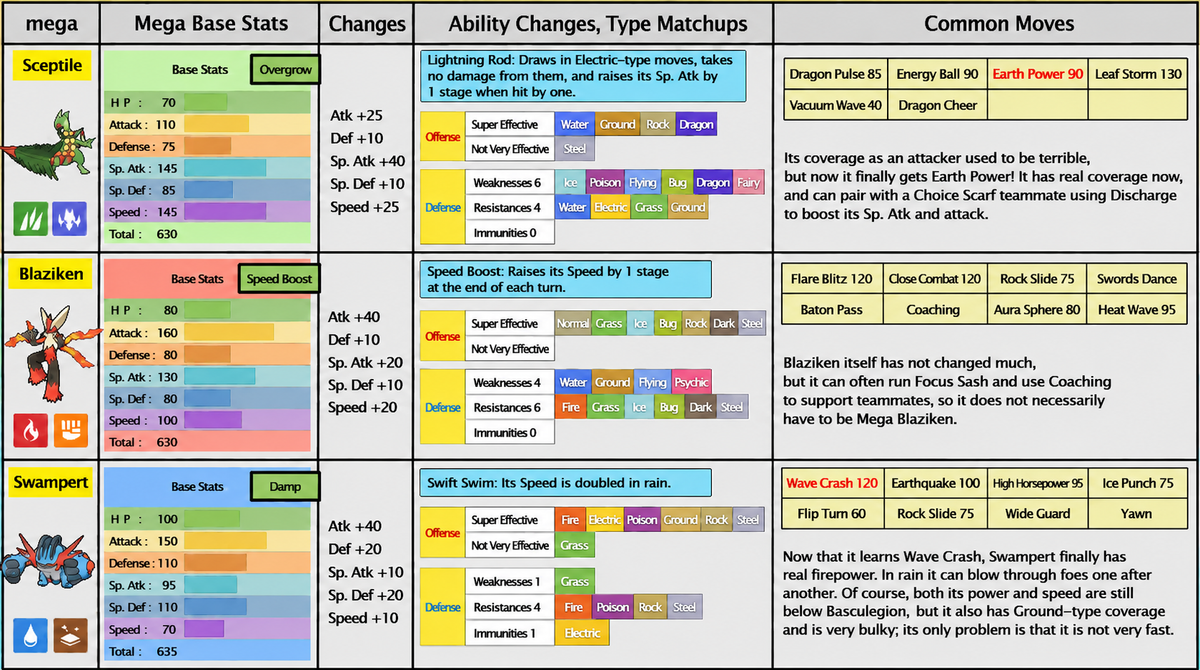
The Hoenn starter Megas show three different versions of offensive risk. Mega Sceptile is extremely fast by the current Pokemon Champions standard. Its Grass/Dragon typing, Lightning Rod, and Earth Power access give it a much better coverage map than before, especially into Steel and Electric-adjacent teams. Still, it is frail, mostly single-target, and unforgiving. Its ceiling is high, but a wrong read often costs the Mega slot.
Mega Blaziken is more familiar: Protect into Speed Boost, then Flare Blitz, Close Combat, and Rock Slide pressure. The damage is real, and Fighting plus Fire is a good offensive pair. The downside is also familiar. Blaziken is fragile, recoil matters, and it has to expose itself to trade. Non-Mega Blaziken can still use Focus Sash, Coaching, Baton Pass, or special Fire coverage, so the team has to prove that raw Mega Blaziken output is worth the slot.
Mega Swampert is the standout. Swift Swim gives rain a dedicated Mega that does not fold to most priority or neutral attacks, and Water/Ground coverage is much more useful than pure Electric coverage. Under rain, high-power Water moves become immediate KO threats, while Earthquake or Ground coverage keeps Steel and Electric Pokemon honest. The four-times Grass weakness is real, but Pelipper and Archaludon cover that weakness naturally in the classic rain shell.
Mega Metagross: still strong, but missing its best button
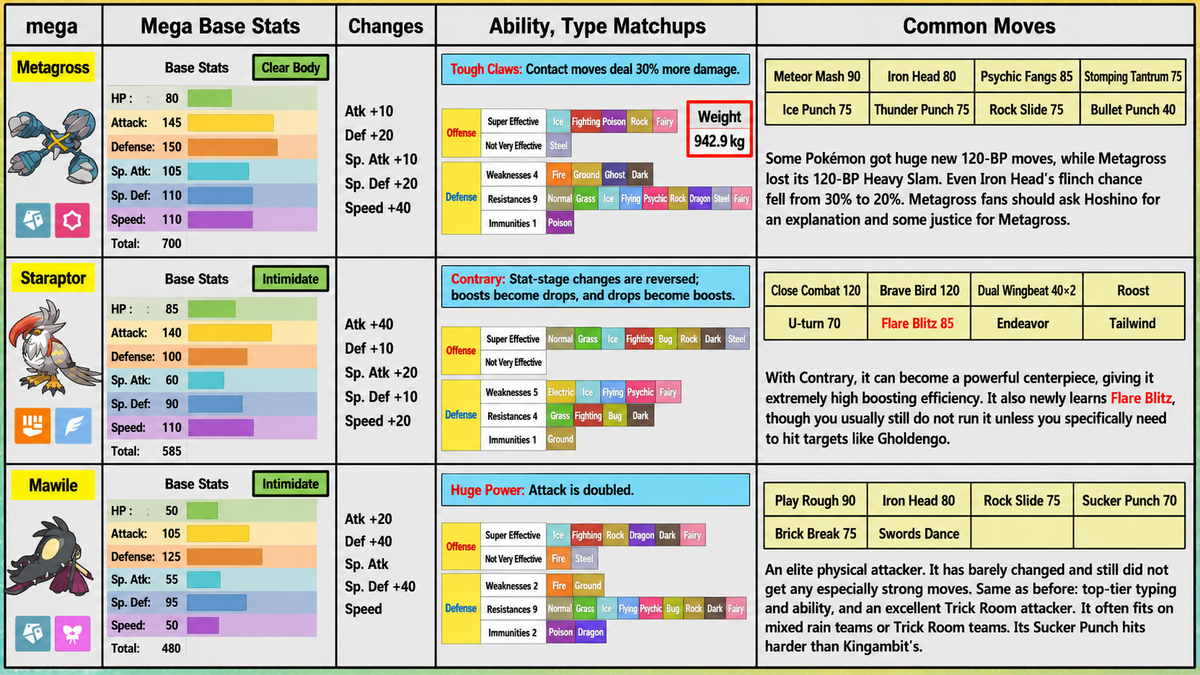
Mega Metagross looks absurd on paper. Its effective stat total is enormous, Steel/Psychic gives many resistances, and Tough Claws improves a large portion of its physical move pool. It should be one of the cleanest Regulation Set M-B winners.
The catch is Heavy Slam. In the source analysis, Heavy Slam is treated as the missing move that would push Mega Metagross into a much higher damage tier. With its weight, Heavy Slam would often behave like a 120-base-power Steel STAB move before Tough Claws. Without it, Metagross must lean on Iron Head, Meteor Mash, Zen Headbutt, Stomping Tantrum, Ice Punch, Thunder Punch, and Bullet Punch. Those are useful, but several are lower power or less accurate than the move it wants most.
That does not make Mega Metagross bad. It remains one of the strongest physical Megas in M-B, especially with Coaching or screen support. It simply means the best teams should treat it as a durable pressure piece, not an unstoppable one-button attacker.
Mega Staraptor: Contrary makes Close Combat a setup move
Mega Staraptor is one of the most explosive new additions because Contrary turns Close Combat into both offense and defense. Instead of dropping defenses, Staraptor raises them while attacking. Fighting/Flying coverage is also excellent into many neutral boards, and a fast snowballing attacker can punish teams that do not carry Ghost pivots, strong Fairy pressure, or immediate special damage.
The weakness is predictability. Mega Staraptor wants to click Close Combat early. If the opponent has Ghost types, Intimidate-resistant positioning, or enough damage to remove it before the first boost matters, the bird can look much less dominant. Choice Scarf Final Gambit sets also exist as a non-Mega idea, but the Mega version is about stacking defensive boosts while dealing real damage.
Mega Mawile: low stats, elite ability, elite typing
Mega Mawile remains a classic contradiction. Its raw stat total is low for a Mega, but Huge Power effectively doubles its Attack, and Steel/Fairy is still one of the best defensive typings in Pokemon. Intimidate and Hyper Cutter both have pre-Mega value: one lowers opposing Attack, while the other protects Mawile from being weakened before it Mega Evolves.
Mega Mawile does not struggle with damage. The issue is move quality and speed. Iron Head and Play Rough are reliable enough but not spectacular, Rock Slide is mainly for targets such as Charizard, and Sucker Punch is essential priority rather than a perfect coverage move. In Trick Room, however, Mega Mawile is still one of the most frightening physical attackers in the rule set. Rain teams can also reduce its Fire weakness, which makes Mawile plus rain a realistic structure rather than a novelty.
Early Regulation Set M-B Mega ranking
The safest early tier is not based on novelty. It is based on how easily a Mega converts one turn into a winning board state. Mega Swampert, Mega Staraptor, Mega Mawile, and Mega Metagross are the most important names to test first. Mega Blaziken, Mega Sceptile, and Mega Raichu Y are strong but require cleaner support. Mega Raichu X and Mega Eelektross are playable, but they need a team that solves their Electric-type blind spots before battle one.
The larger lesson is that Regulation Set M-B rewards complete profiles. A good custom ability is not enough. The best M-B Megas have at least three of the following: immediate damage, survivability, strong typing, coverage into common answers, and a simple partner package. Mega Swampert has Pelipper and Archaludon. Mega Mawile has Trick Room and rain support. Mega Staraptor has immediate Close Combat pressure. Mega Metagross has bulk, resistances, and priority. That is why they should define the early ladder.
Additional M-B Mega notes
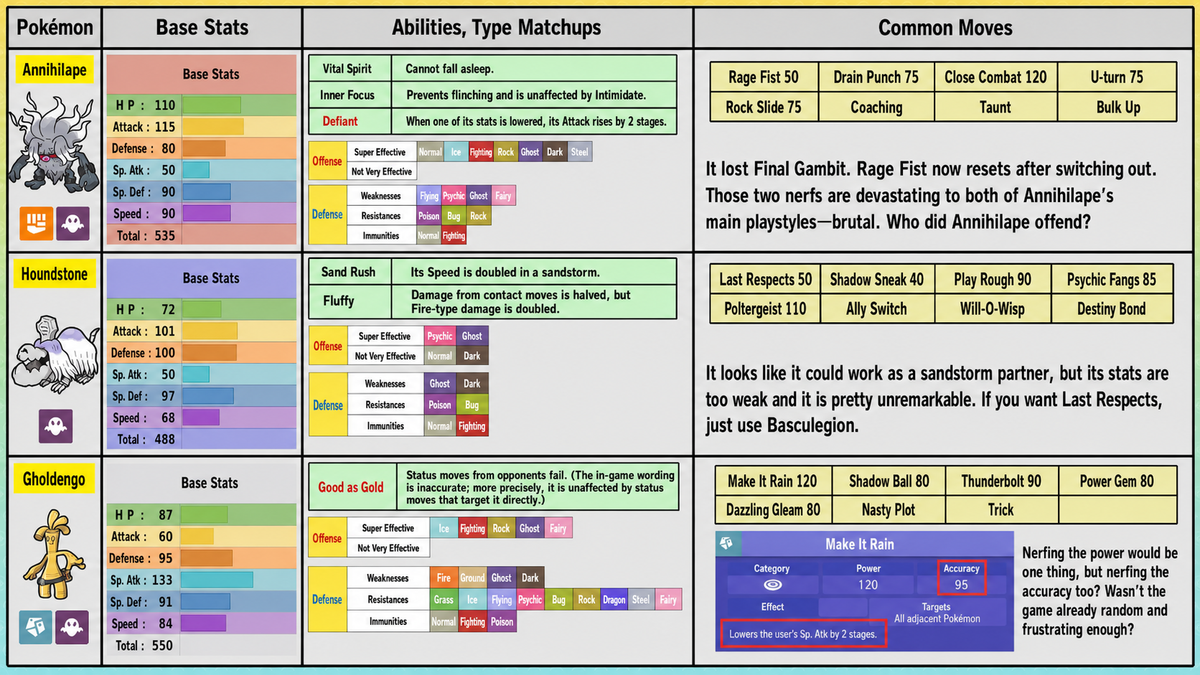
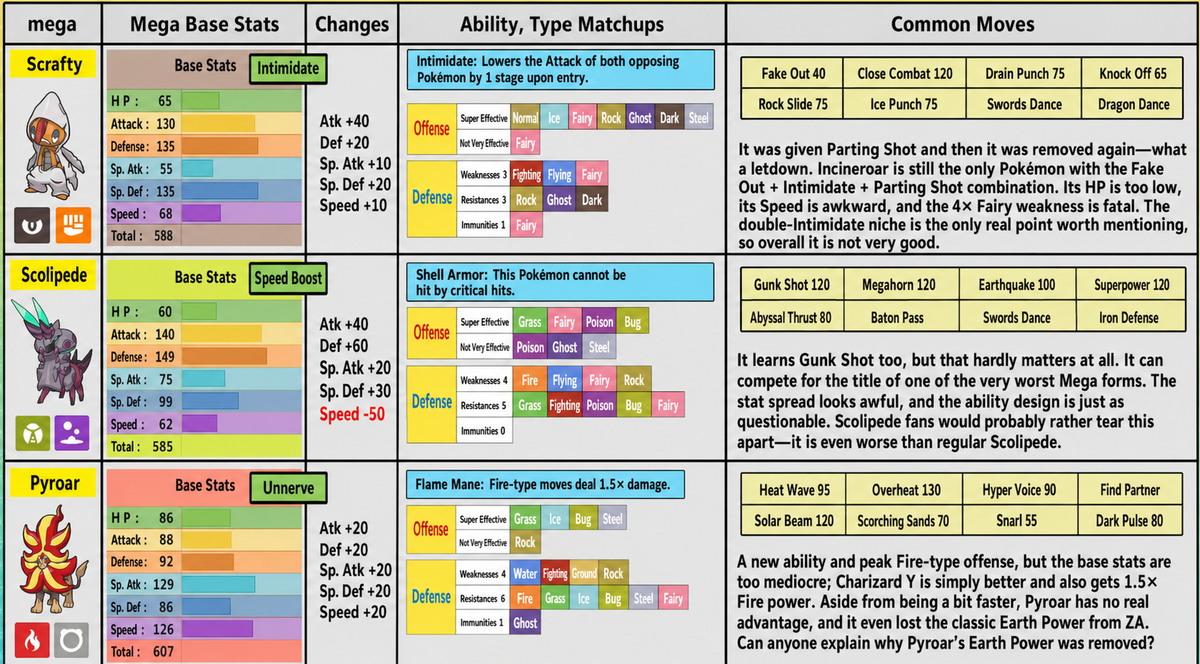
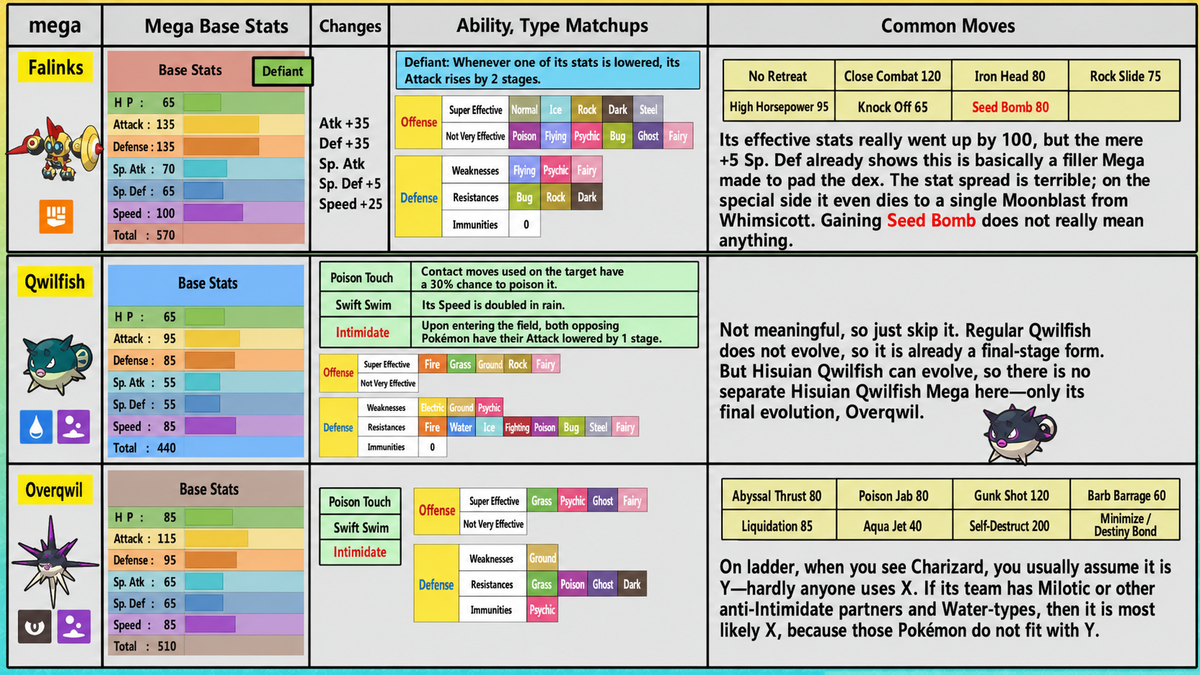
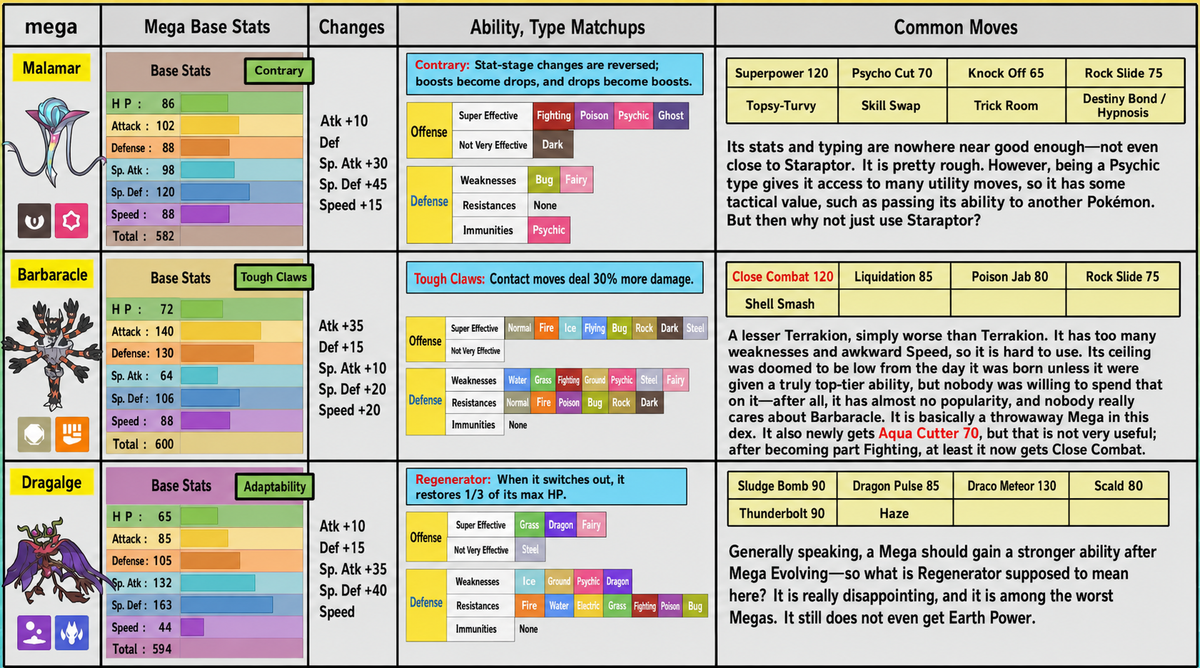
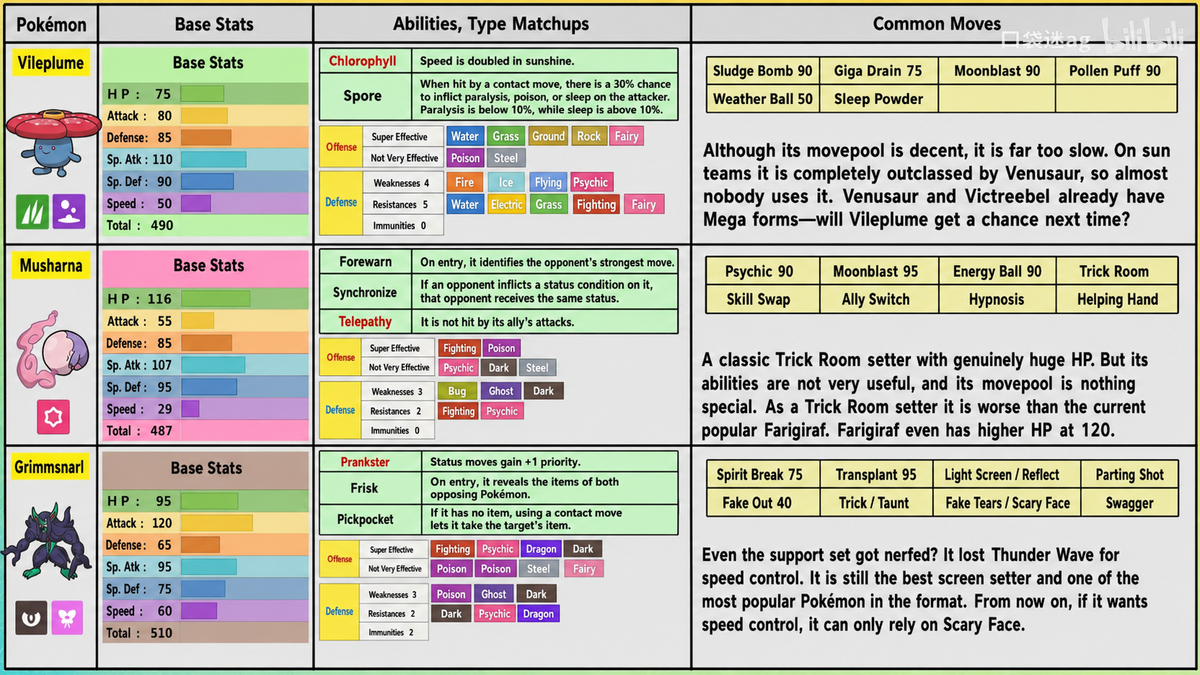
The remaining source images are included below for players who want the full visual reference set while comparing secondary Mega picks and niche matchup roles.
Read related articles
Keep building better Pokemon Champions teams with more guide coverage.
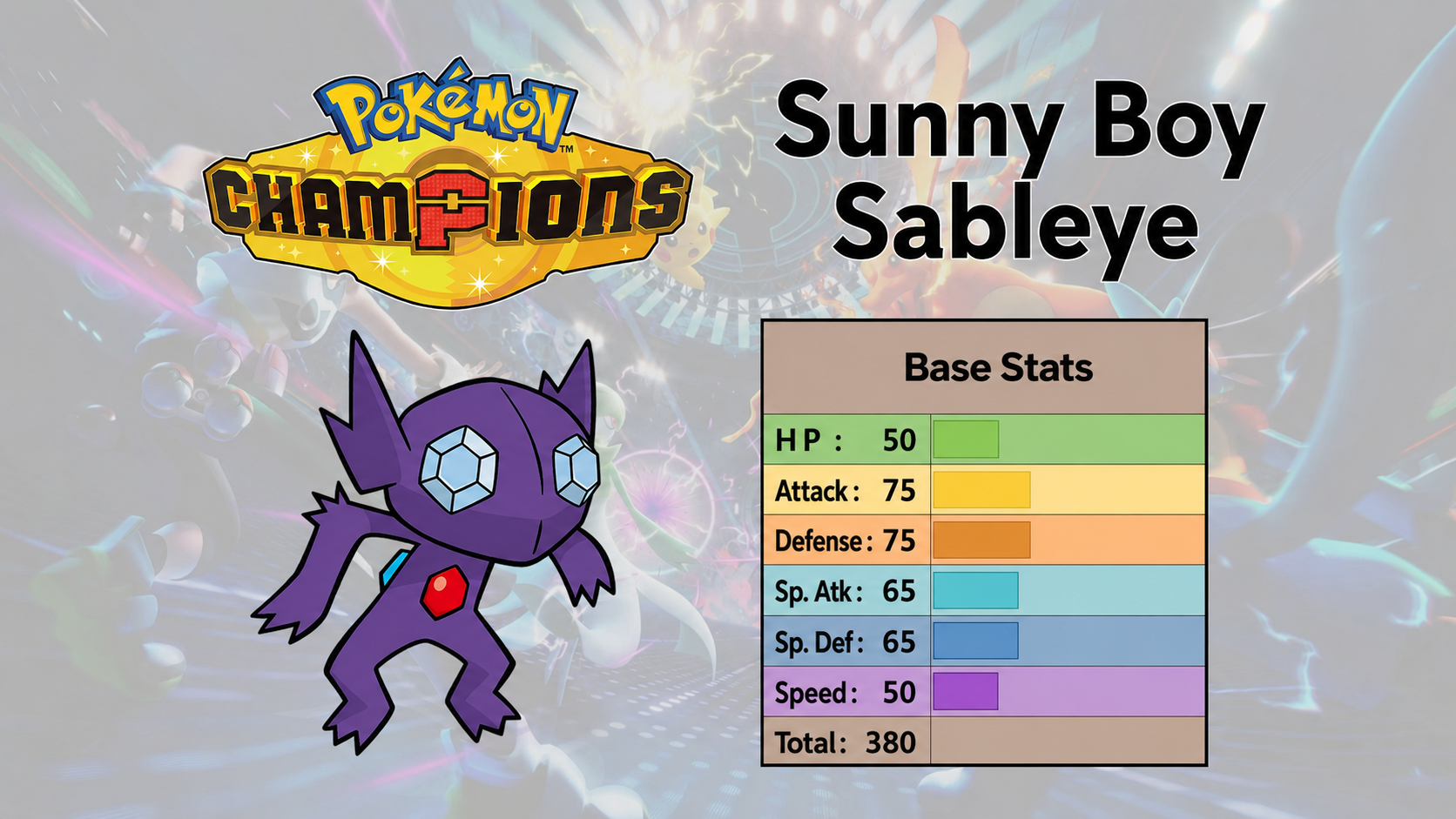
Pokemon Champions Sableye Build Guide - Prankster Support
Complete Pokemon Champions Sableye build guide for Regulation Set M-B, covering Prankster, Light Clay screens, Rain Dance, Encore, Disable, Will-O-Wisp, EVs, partners, and counters.
Read guide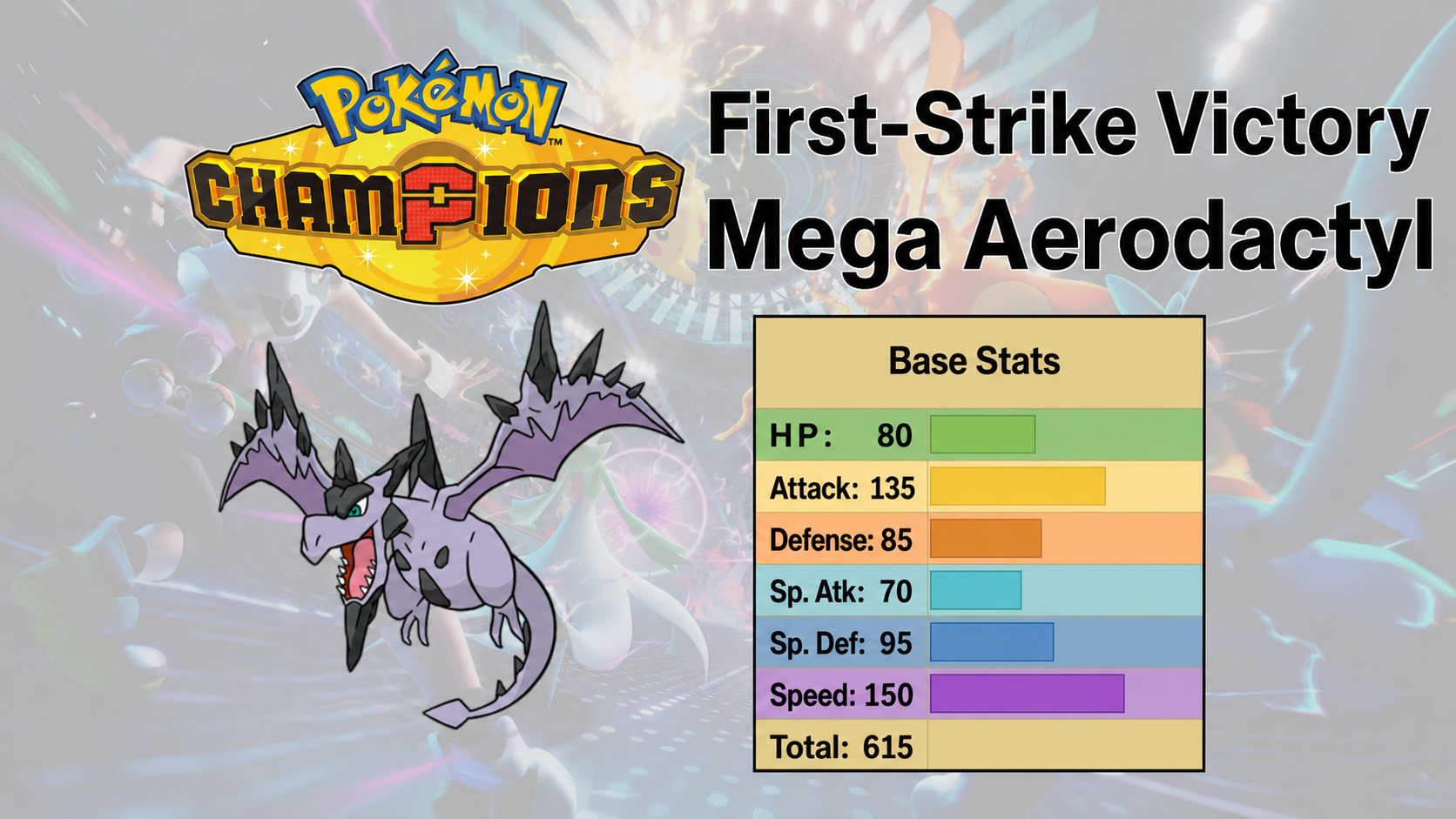
Pokemon Champions Mega Aerodactyl Build Guide - Tailwind and Rock Slide
Complete Pokemon Champions Mega Aerodactyl build guide for Regulation Set M-B, covering Tailwind, Rock Slide, Dual Wingbeat, Ice Fang, Wide Guard, EVs, damage benchmarks, partners, and counterplay.
Read guide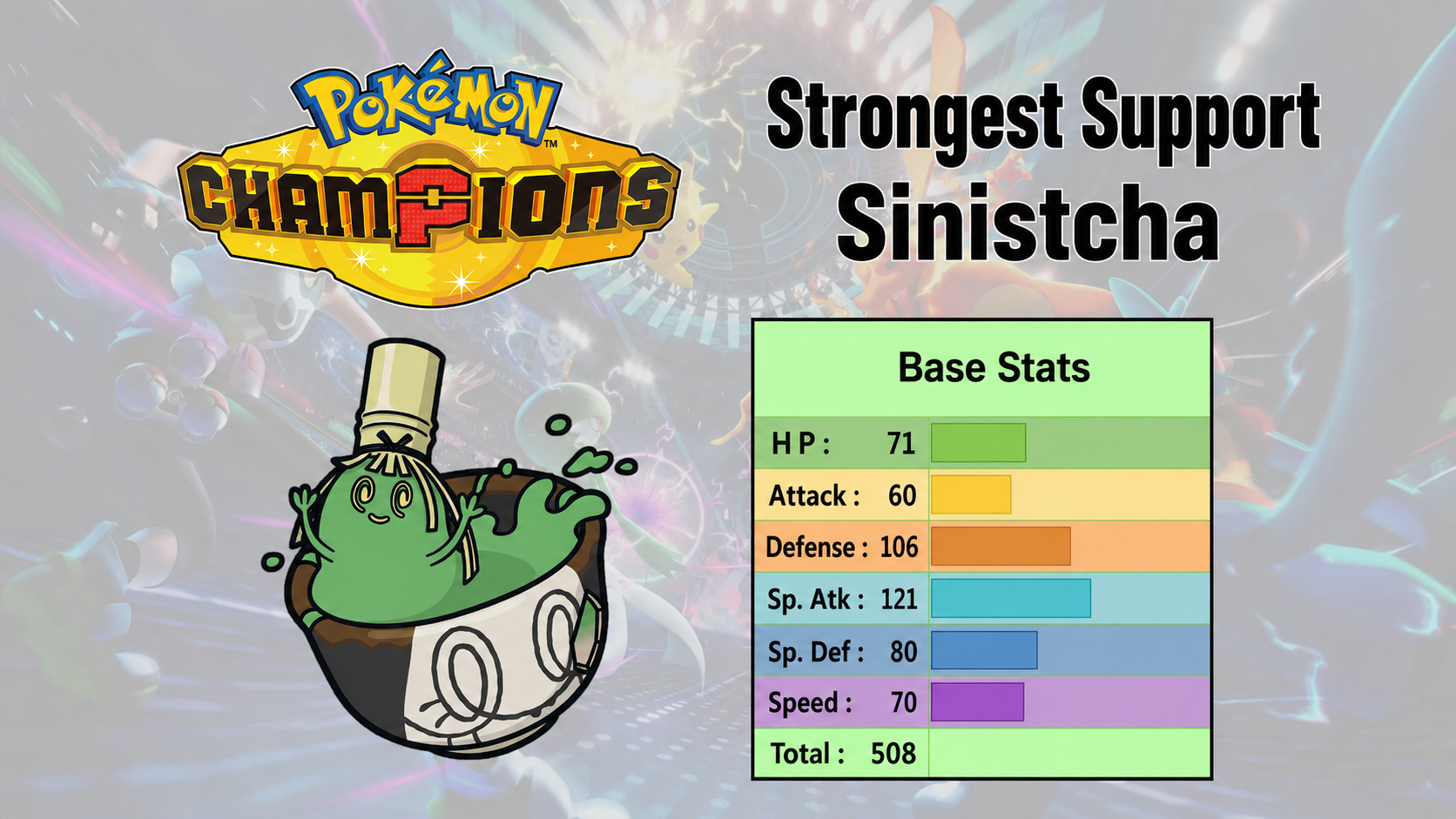
Pokemon Champions Sinistcha Build Guide - Matcha Gotcha Support
Complete Pokemon Champions Sinistcha build guide for Regulation Set M-B, covering Hospitality, Rage Powder, Matcha Gotcha, Life Dew, Trick Room, EVs, resist berries, matchups, and Shell Smash Blastoise teams.
Read guide