Garchomp Guide
Pokemon Champions Garchomp Build Guide
Life Orb Ranked Moveset for Regulation Set M-B
Garchomp is the most reliable physical attacker in the current Pokemon Champions Regulation Set M-B ladder. It combines a nearly perfect stat spread, broad Dragon and Ground coverage, Rough Skin punishment, and Life Orb damage that fixes several key KO ranges without giving up its 102 Speed tier.
Published
Best default item
Life Orb is the practical Mega Stone for regular Garchomp: it raises real damage while preserving its important Speed tier.
Core moves
Protect, Dragon Claw, Earthquake, and Rock Slide form the baseline set, with Rock Tomb, Poison Jab, and Stomping Tantrum as team-specific swaps.
Team rule
Every serious Garchomp team needs at least one Flying or Levitate partner so Earthquake does not lock your own side into Protect.
Why Garchomp is rank one in Pokemon Champions
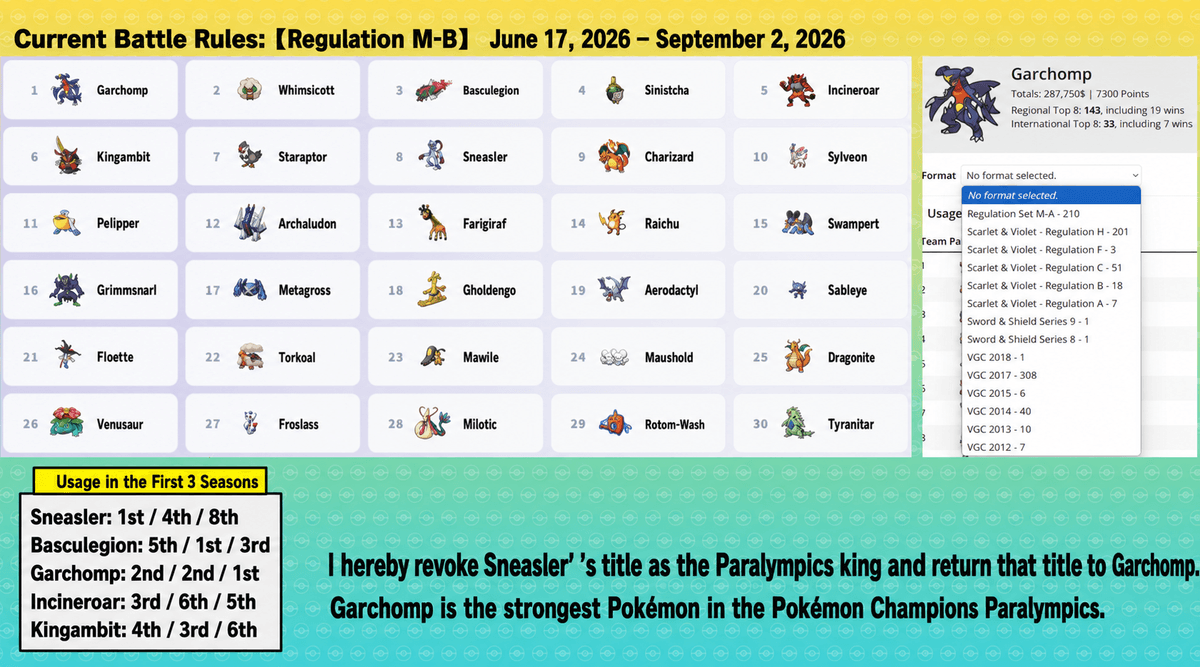
Garchomp has been one of the most stable Pokemon Champions picks across the first three seasons. The usage trend is the main reason this guide treats it as a top-tier ranked staple: second in season one, second in season two, and first in the current Regulation Set M-B data. Other physical attackers have moved up and down, but Garchomp has stayed useful because it asks very little from the builder and gives back immediate pressure.
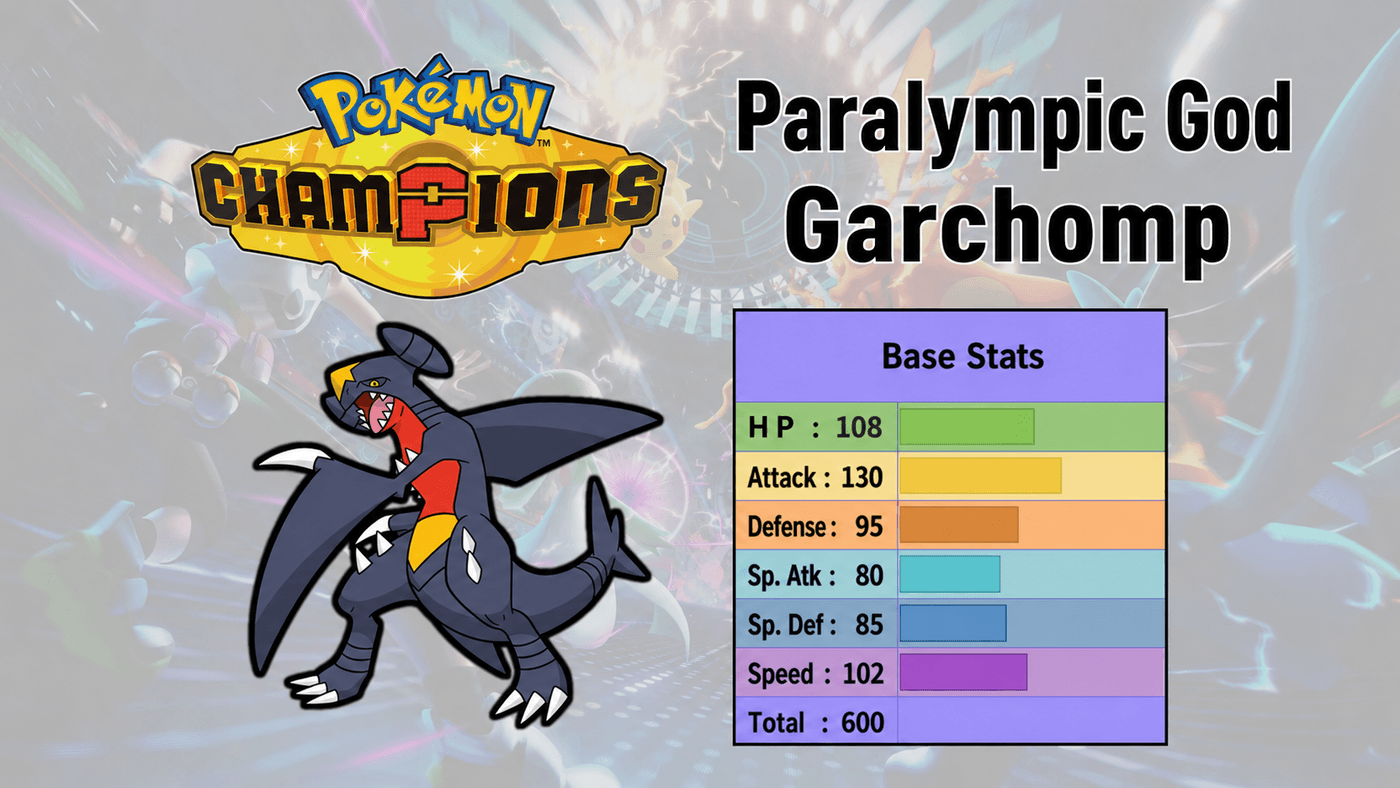
Its base stats explain the consistency. Garchomp has 108 HP, 130 Attack, 95 Defense, 85 Special Defense, and 102 Speed. The only wasted stat is Special Attack. In practice, that means a huge amount of its 600 base stat total is placed exactly where a ranked physical attacker wants it: bulk, Speed, and Attack.
The best Garchomp build: Life Orb plus Rough Skin
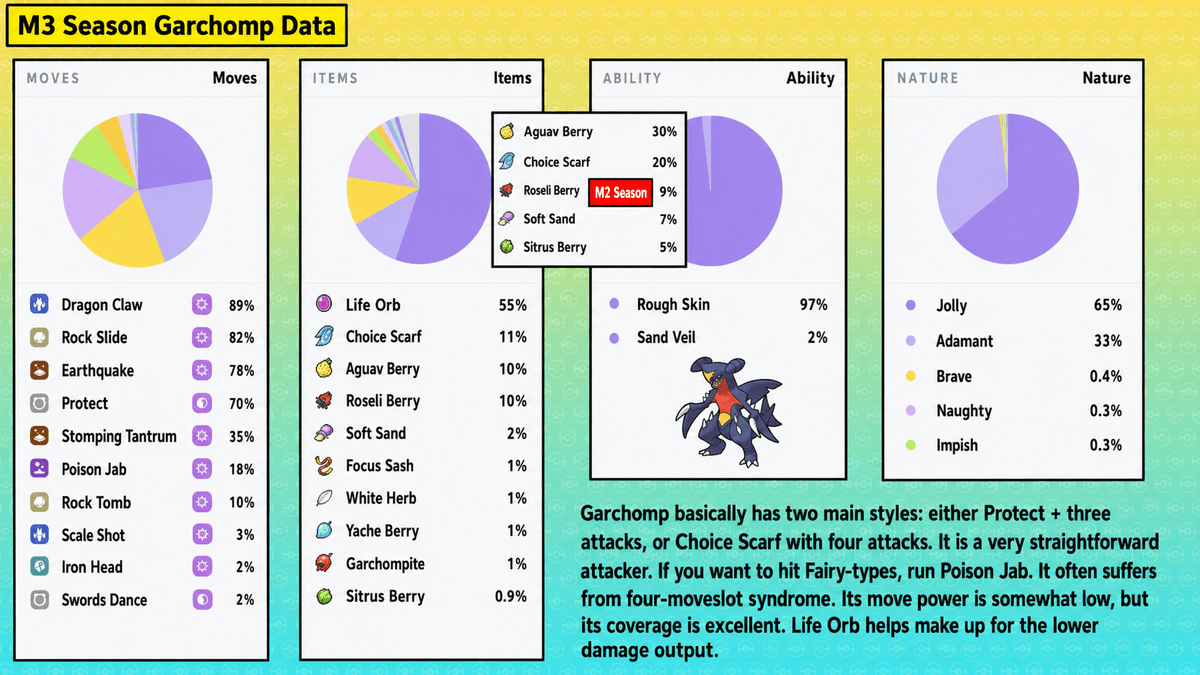
The current M3 season data is direct: Life Orb is the dominant item, Rough Skin is the default ability, and Jolly is the preferred nature. That combination is not random. Garchomp needs the Life Orb boost because its strongest common attacks are not actually high-base-power nukes. Dragon Claw is reliable but only 80 base power. Earthquake is strong on paper, but in doubles it is spread damage. Rock Slide is also spread damage and is often chosen for coverage rather than raw power.
Rough Skin is not a flashy ability, but it is valuable in the exact games where opponents try to trade into Garchomp with contact moves. Fake Out, Extreme Speed, Close Combat-style pressure, and multi-hit contact moves can all take chip in return. That chip can break Focus Sash, push opponents into Dragon Claw range, and punish physical attackers that would otherwise treat Garchomp as a clean target.
Recommended Garchomp moveset
The safest ranked Garchomp moveset is Protect, Dragon Claw, Earthquake, and Rock Slide. Protect is necessary because Garchomp draws Ice, Fairy, and Dragon attacks immediately. Dragon Claw is the stable Dragon STAB and the mirror-match button. Earthquake is the reason to build around Garchomp in doubles. Rock Slide covers Flying targets, especially Mega Charizard Y, and gives Garchomp a way to threaten opponents that avoid Earthquake.
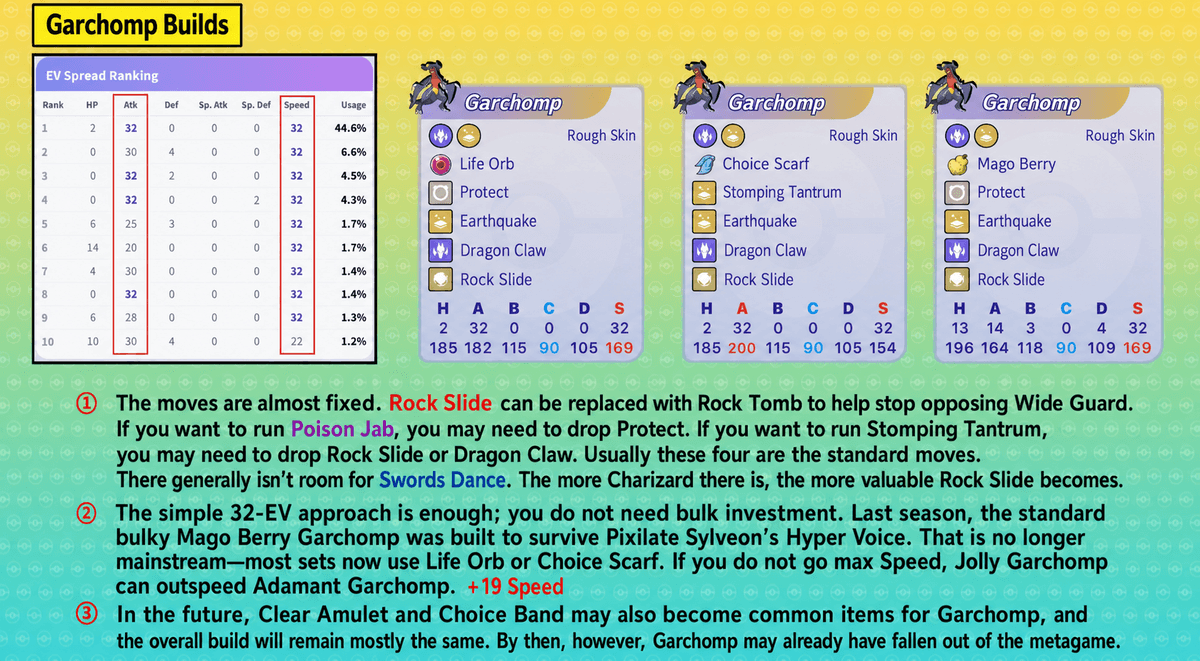
The fourth slot is where team context matters. Rock Tomb can replace Rock Slide when Wide Guard is a major concern or when single-target speed control is more important than spread chip. Poison Jab is the cleanest coverage move into Fairy targets such as Sylveon and Gardevoir-style answers. Stomping Tantrum gives a single-target Ground attack when Earthquake would punish your own side too hard. Swords Dance is tempting, but the standard set rarely has room for it.
Why regular Garchomp is usually better than Mega Garchomp
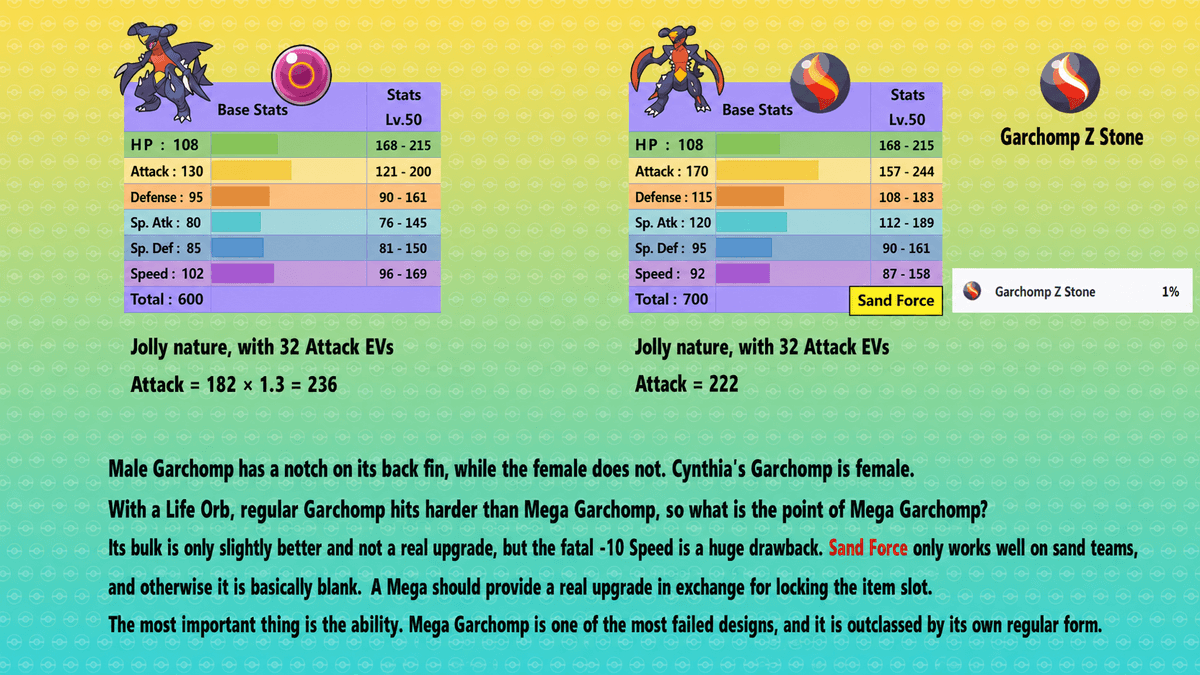
Mega Garchomp looks attractive because the stat total jumps and the Attack number rises, but Pokemon Champions ranked games care about what the Mega Stone costs. Regular Garchomp can hold Life Orb, which gives immediate damage without dropping below the critical 100 Speed area. Mega Garchomp loses Speed and becomes easier for Charizard, fast utility, and many mid-speed offensive Pokemon to punish.
The comparison is simple: if a Mega form does not add a decisive ability, decisive typing change, or decisive Speed profile, locking the item slot is expensive. Garchomp already has the stat spread it wants. Life Orb amplifies that spread better than Mega Garchomp does in most Regulation Set M-B teams.
Important damage benchmarks
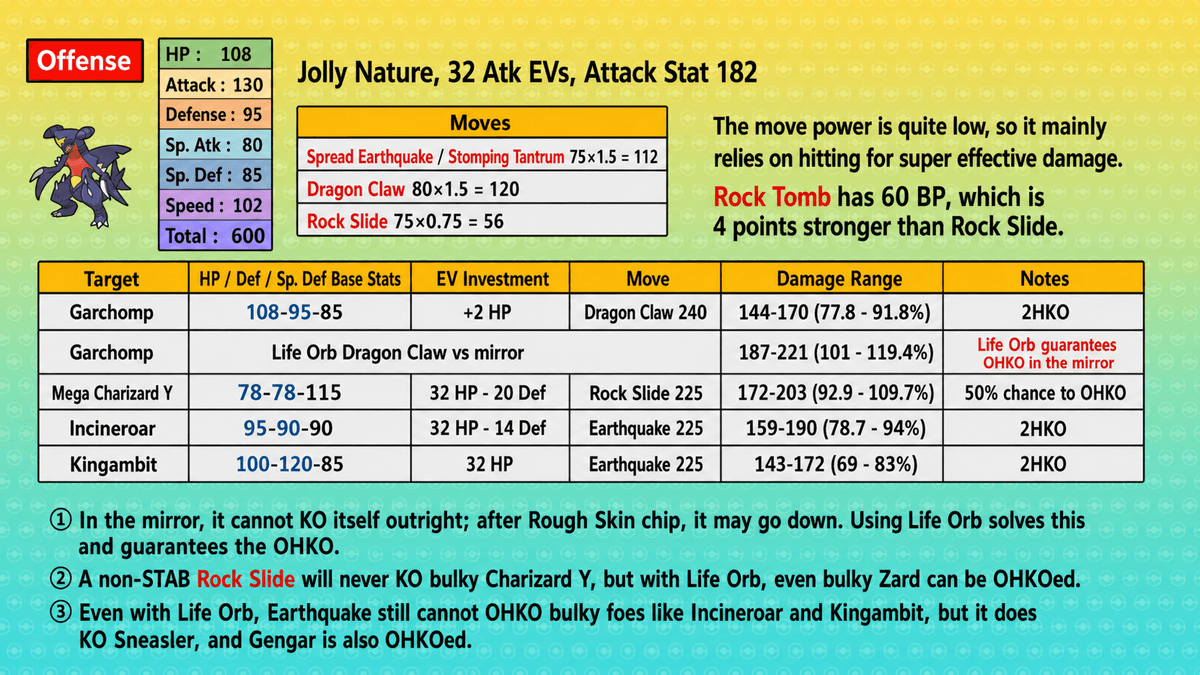
Life Orb matters most in two matchups. First, Garchomp mirrors become much cleaner: Jolly Dragon Claw from a Life Orb Garchomp is the kind of damage that can remove opposing Garchomp instead of leaving it barely alive. Second, Rock Slide becomes much more reliable into bulky Mega Charizard Y. Without Life Orb, Rock Slide can miss important KO ranges even when the hit is four times effective.
The same chart also shows the ceiling. Even with Life Orb, Earthquake and Stomping Tantrum do not always delete bulky Incineroar or Kingambit-style targets. That is the tradeoff of Garchomp: the coverage is broad and the floor is high, but the actual move power is not the same as a dedicated nuke. Treat Garchomp as a consistent pressure piece, not as a button that removes every bulky Pokemon by itself.
EV direction and defensive benchmarks
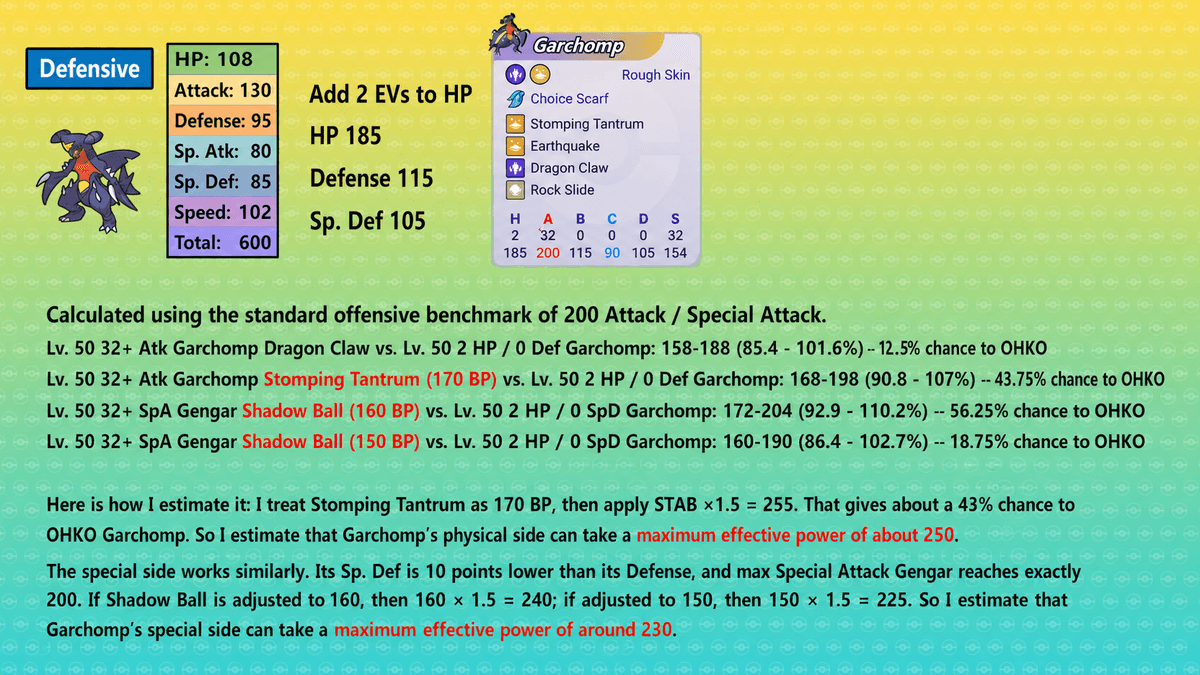
The cleanest starting point is Jolly with enough Speed to win relevant Garchomp mirrors and enough Attack to reach the Life Orb benchmarks your team needs. The source material uses 32 Attack EVs as a common offensive benchmark, but the broader lesson is not that every team must copy one exact spread. The lesson is that each point should serve a matchup.
Garchomp is bulkier than most attackers, so defensive investment can matter. It can survive many neutral hits, but it should not be asked to casually absorb strong Ice, Dragon, or Fairy attacks. When calculating bulk, do not chase a perfect 100 percent survival roll unless the matchup requires it. Many competitive EV spreads accept a low knockout chance and spend the saved points on Speed or damage.
Typing, coverage, and what Garchomp cannot hit cleanly
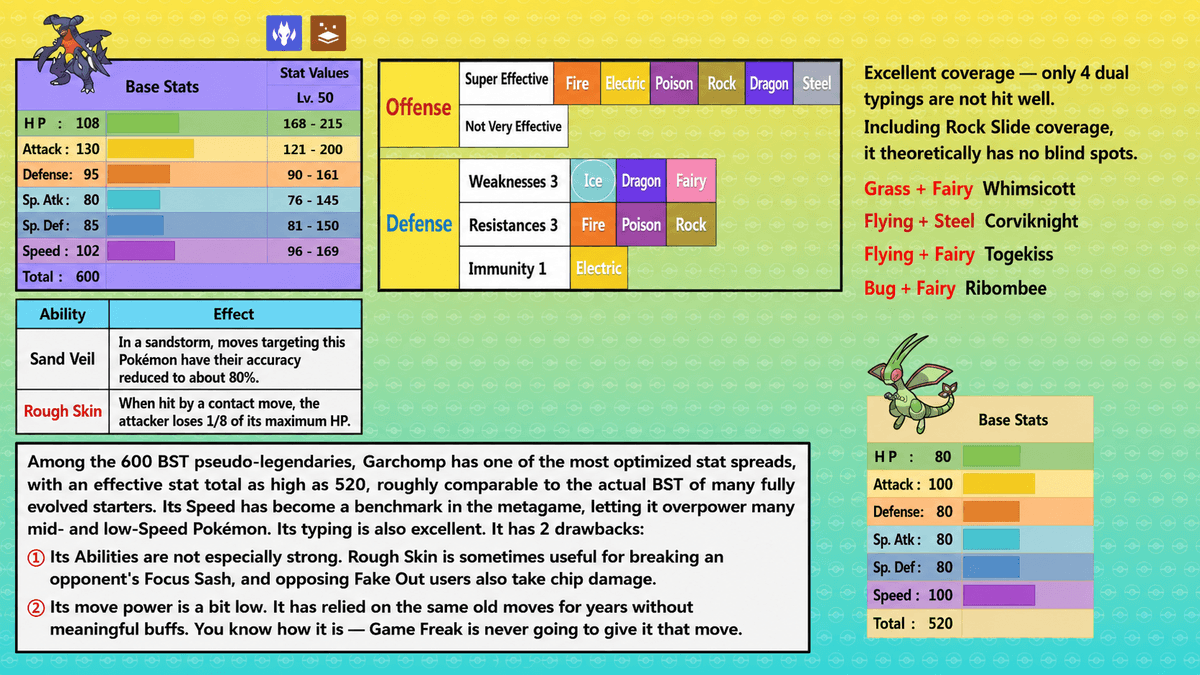
Dragon plus Ground is one of the strongest coverage packages in Pokemon Champions. Garchomp pressures Fire, Electric, Poison, Rock, Dragon, and Steel targets while resisting Fire, Poison, and Rock and ignoring Electric attacks entirely. Add Rock Slide and the list of true defensive blind spots becomes very small.
The problem is not coverage on paper. The problem is specific defensive answers. Fairy combinations, Flying and Steel structures, and Pokemon such as Whimsicott, Corviknight, Togekiss, and Ribombee can force awkward turns. That is why Poison Jab, Rock Tomb, and partner damage are real build decisions rather than cosmetic options.
Best teammates for Garchomp
Garchomp teams should start with one rule: include at least one Flying or Levitate partner. Earthquake is too important to make every turn depend on your own partner clicking Protect. Charizard-style Flying Megas, Aerodactyl-style Flying pressure, Levitate users, and bulky partners that do not mind Earthquake chip all make Garchomp easier to pilot.
The partner also needs to cover Garchomp weaknesses. Fairy answers help against Sylveon, Gardevoir, and Whimsicott. Steel or Fire pressure helps remove Ice and Fairy pivots. Speed control is useful because Garchomp is fast, but not untouchable. If the team can keep Garchomp attacking while the partner avoids Earthquake damage, the ranked game becomes much easier.
Final verdict: should you build Garchomp?
Yes. If you play ranked Regulation Set M-B, your box should have a serious Garchomp build. It is not flawless: the move power is lower than the usage ranking suggests, Mega Garchomp is usually a trap, and Ice, Fairy, and Dragon pressure can remove it quickly. But regular Life Orb Garchomp is still one of the best all-purpose physical attackers in Pokemon Champions because it compresses Speed, damage, coverage, and Rough Skin utility into one slot.
Read related articles
Keep building better Pokemon Champions teams with more guide coverage.
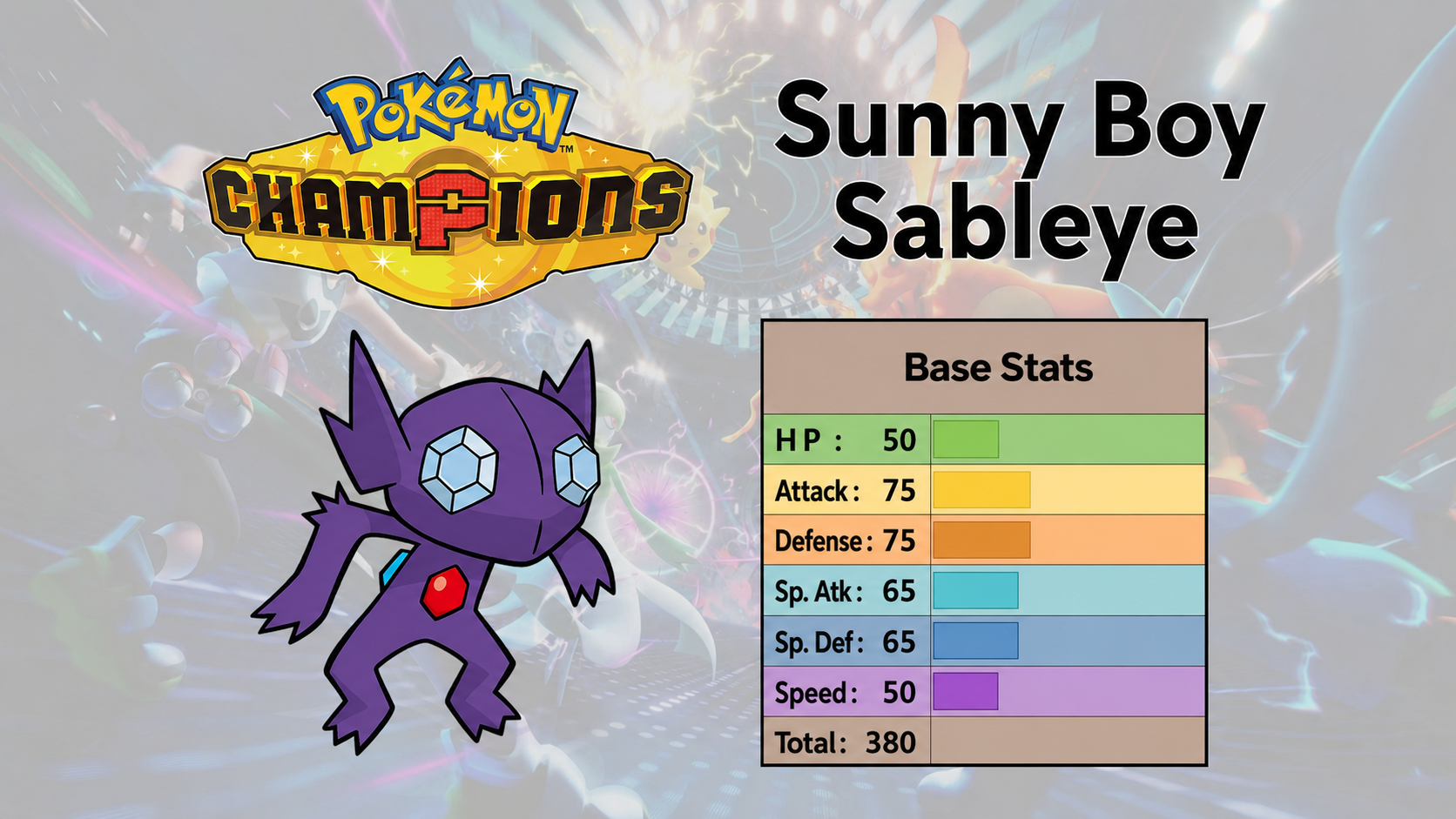
Pokemon Champions Sableye Build Guide - Prankster Support
Complete Pokemon Champions Sableye build guide for Regulation Set M-B, covering Prankster, Light Clay screens, Rain Dance, Encore, Disable, Will-O-Wisp, EVs, partners, and counters.
Read guide
Pokemon Champions Mega Aerodactyl Build Guide - Tailwind and Rock Slide
Complete Pokemon Champions Mega Aerodactyl build guide for Regulation Set M-B, covering Tailwind, Rock Slide, Dual Wingbeat, Ice Fang, Wide Guard, EVs, damage benchmarks, partners, and counterplay.
Read guide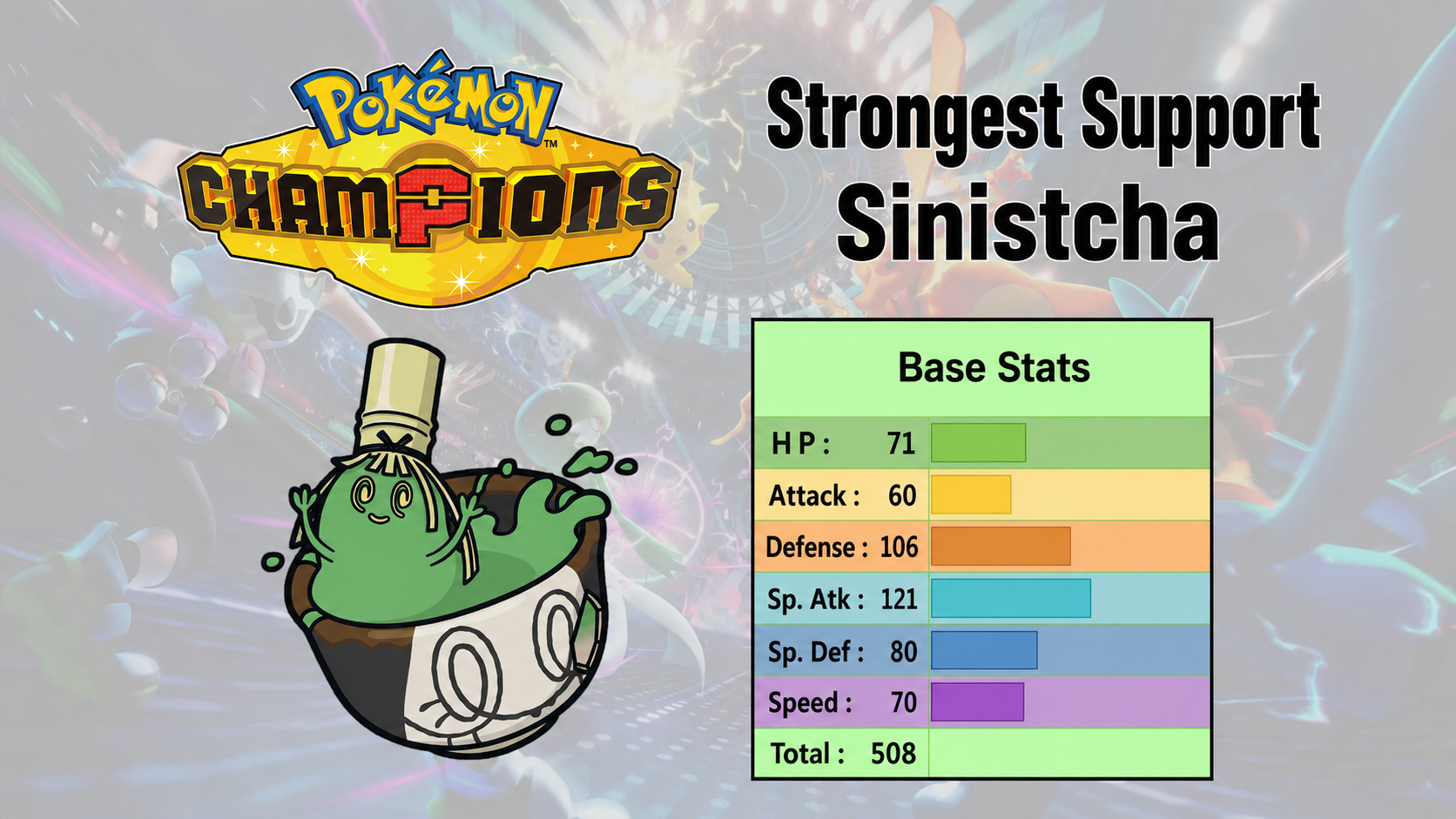
Pokemon Champions Sinistcha Build Guide - Matcha Gotcha Support
Complete Pokemon Champions Sinistcha build guide for Regulation Set M-B, covering Hospitality, Rage Powder, Matcha Gotcha, Life Dew, Trick Room, EVs, resist berries, matchups, and Shell Smash Blastoise teams.
Read guide